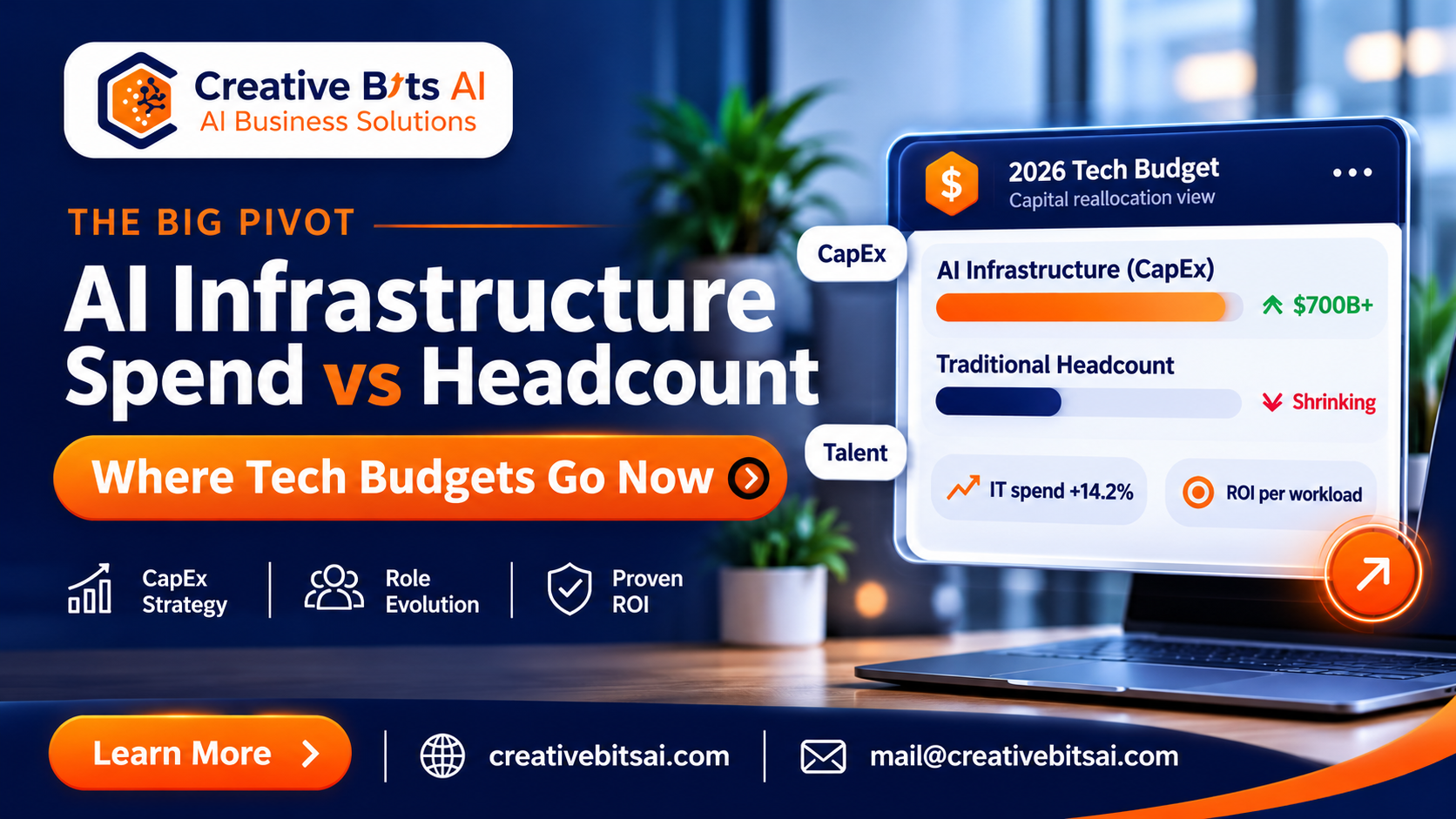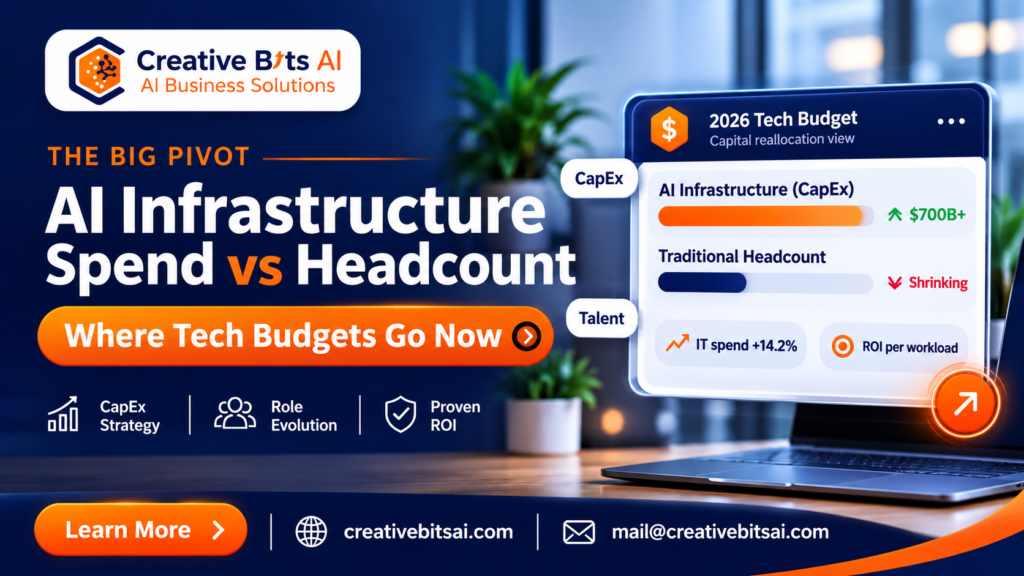
AI infrastructure spend is the fastest-growing line item in enterprise technology budgets, and it is increasingly funded by the line it sits next to: headcount. Major tech firms are reallocating capital away from traditional organizational expansion and funneling it directly into data centers, GPUs, and the platforms that run generative AI.
The numbers confirm the pivot is structural, not cyclical. Gartner forecasts worldwide IT spending will grow 14.2% in 2026 to $6.37 trillion, with data center systems the fastest-growing segment. Meanwhile, the four largest hyperscalers have pushed their combined 2026 capital spending plans past the $700 billion mark, and the same companies announcing record CapEx are cutting thousands of corporate roles in AI-driven restructurings.
For enterprise leaders, this creates a double-edged challenge: maintain a blistering pace of AI innovation while navigating complex workforce transitions and managing investor expectations. This guide breaks down where the money is going, how roles are evolving, and the governance and ROI disciplines that keep the pivot from becoming a write-off.
The CapEx Surge: Where the Budgets Are Going
Tech giants are pouring hundreds of billions of dollars into hyperscale data centers, specialized liquid-cooling facilities, and advanced silicon like NVIDIA’s Blackwell-class accelerators. Meta alone has guided 2026 capital expenditure to a range of $125 billion to $145 billion, while Alphabet’s quarterly CapEx has more than doubled year over year.
This surge requires a rebalancing of operational budgets. Money that previously funded large, generalized engineering cohorts or mid-level management tiers is now deployed to secure the compute needed to run next-generation foundation models. Three forces drive the reallocation:
- Compute scarcity. Advanced accelerators and the power and cooling capacity around them are supply-constrained, so firms lock in capacity years ahead, often with debt financing.
- Investor scrutiny. Markets now reward visible AI capability over raw headcount growth, and leadership teams are restructured to show it.
- Falling cost of software leverage. Each engineer amplified by AI tooling covers more ground, which lowers the headcount needed per unit of output and raises the return on every infrastructure dollar.
The OpEx Squeeze: Efficiency Beats Expansion
Throwing raw capital at infrastructure hardware is only half the battle. Unoptimized compute quickly leads to diminishing returns and bloated cloud bills, and CFOs have noticed: cost per token is becoming a board-level metric.
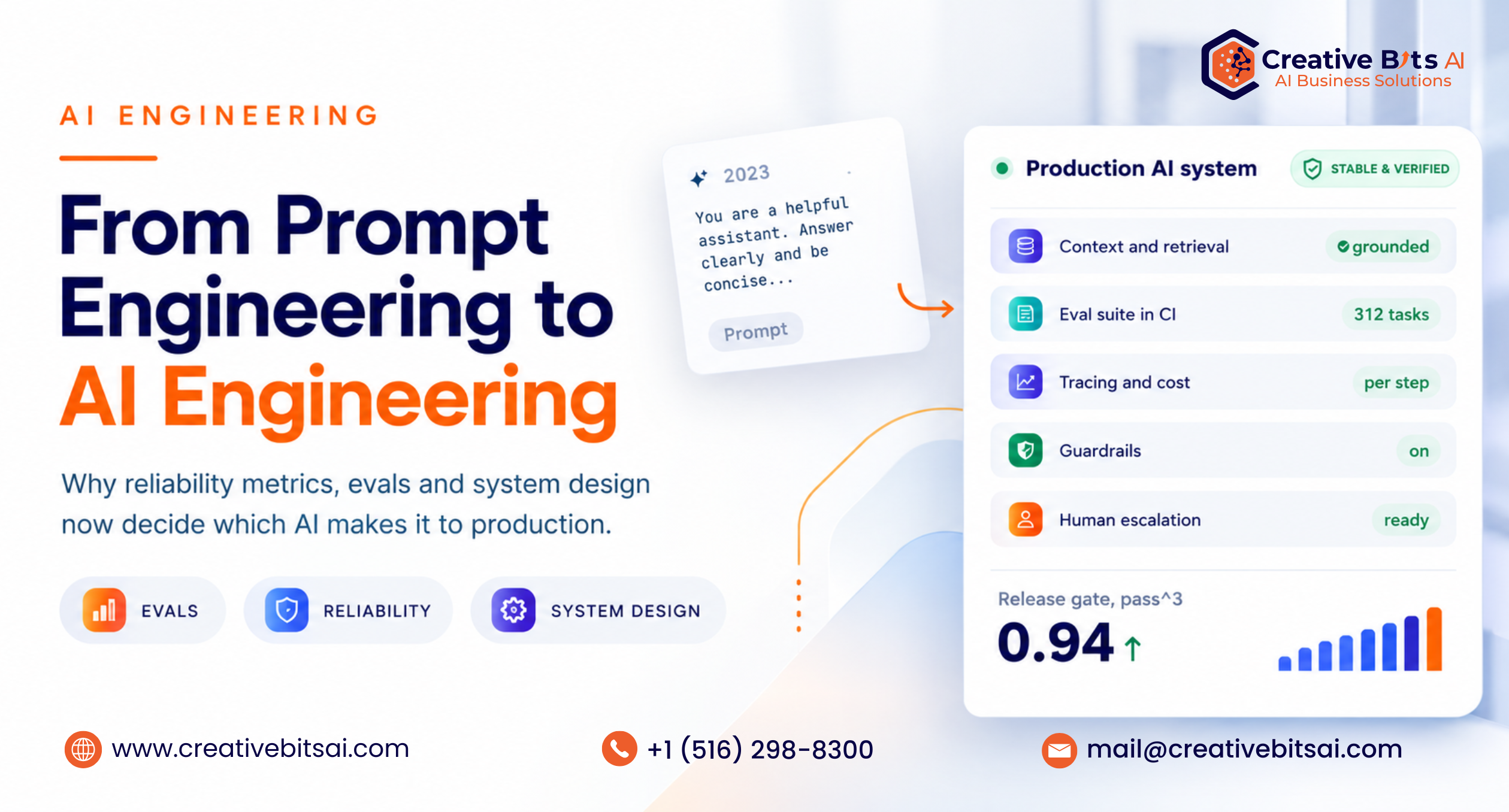
Forward-thinking companies are finding efficiencies by maturing their internal development methodologies. Organizations are shifting from prompt engineering to AI engineering to build reliable, metrics-driven systems that maximize the value of every token processed. The discipline looks like this:
- Evaluation gates before scale. No workload graduates to expensive compute until it passes defined accuracy and reliability thresholds.
- Right-sized models. Smaller, grounded models handle routine workloads; frontier models are reserved for the problems that justify their cost.
- Consumption telemetry. Teams track cost per resolution or cost per task, not just aggregate cloud spend, so waste is visible weekly instead of at quarter close.
The companies that treat AI engineering as a budgeting discipline get more capability out of the same infrastructure dollar, which is exactly the leverage the headcount reallocation is supposed to buy.
Managing Workforce Transitions and Role Evolution
The structural reallocation of budgets does not simply mean trimming organizational talent; it means fundamentally altering the type of talent required. The industry is witnessing a consolidation of generalist software engineering roles, making way for specialized AI operators, machine learning engineers, and data supply-chain architects who understand how to orchestrate autonomous systems. Amazon’s 2026 restructuring alone accounts for tens of thousands of corporate roles, explicitly framed by leadership as an AI efficiency decision rather than a cost emergency.
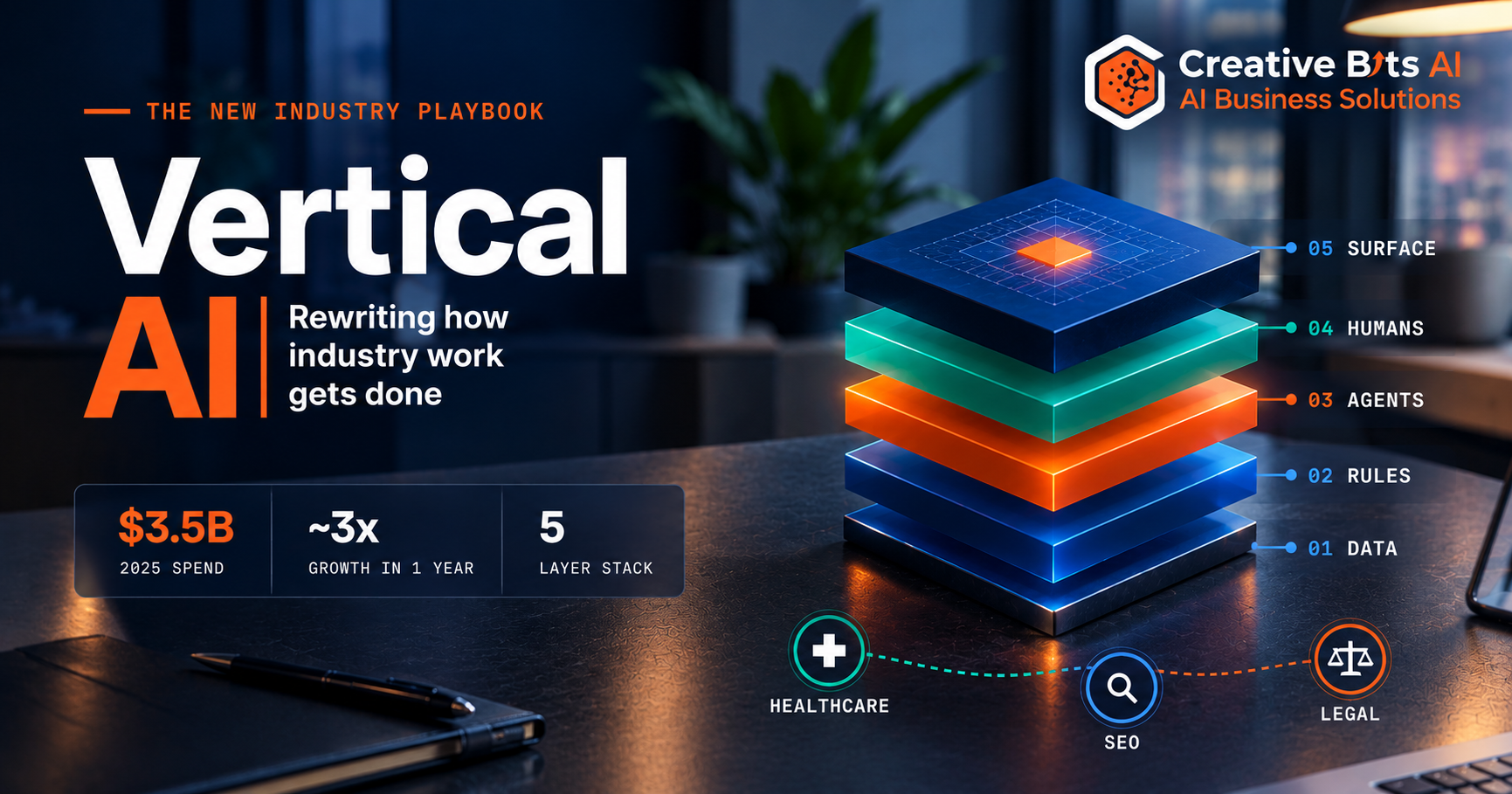
To bridge the operational gap without triggering a secondary spike in headcount, enterprise leaders are turning to specialized, industry-focused automation. Deploying Vertical AI platforms built for proprietary business domains gives legacy teams massive operational leverage. By grounding AI in domain-specific data, companies can optimize complex workflows in legal, healthcare, or logistics, letting human workers pivot toward high-value supervisory and strategic roles instead of repetitive manual tasks.
The practical sequencing matters:
- Map tasks, not jobs. Inventory which activities inside each role are automatable; most roles shed tasks before they disappear.
- Retrain toward supervision. The highest-ROI reskilling moves people from doing the workflow to auditing, escalating, and improving the automated version of it.
- Protect institutional knowledge. The people leaving often hold the context your AI needs; capture their process knowledge into the knowledge bases that ground your systems before the transition, not after.
Strategic Risk and Governance in the New Era
As infrastructure budgets balloon and automated systems take over core workflows, risk management cannot remain an afterthought. Moving capital away from human oversight and into autonomous software creates a governance vacuum, and corporate risk teams frequently clash with aggressive innovation teams over who owns it.
To scale safely without inviting regulatory penalties or data leaks, enterprises should run infrastructure expansion through strict compliance frameworks:
- An enterprise-wide AI Risk Register that catalogs every deployed model, its data access, its owner, and its failure modes, so every dollar of infrastructure spend sits behind a Zero Trust security gate.
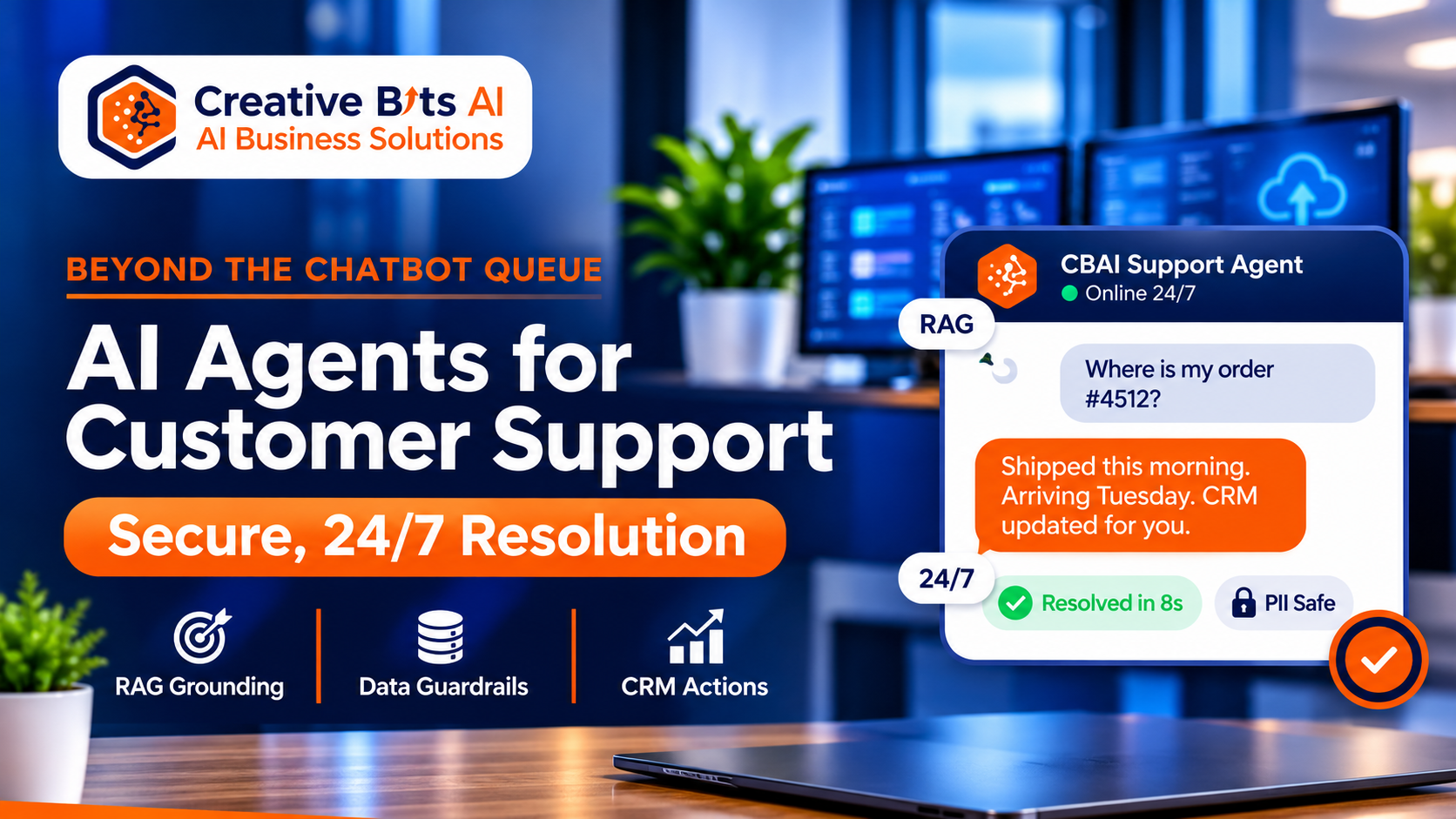
- Guardrails on customer-facing systems. Autonomous agents that touch customer data need PII redaction, prompt-injection monitoring, and least-privilege API access — the architecture we detail in safeguarded RAG chatbots for enterprise security.
- Audit trails as a budget line. Logging and attribution are not overhead; they are what lets the CFO defend the spend, and the CISO approve the next deployment.
This balance ensures automated data flows do not compromise proprietary intellectual property or expose sensitive customer data while the organization scales.
Two Budget Models Compared
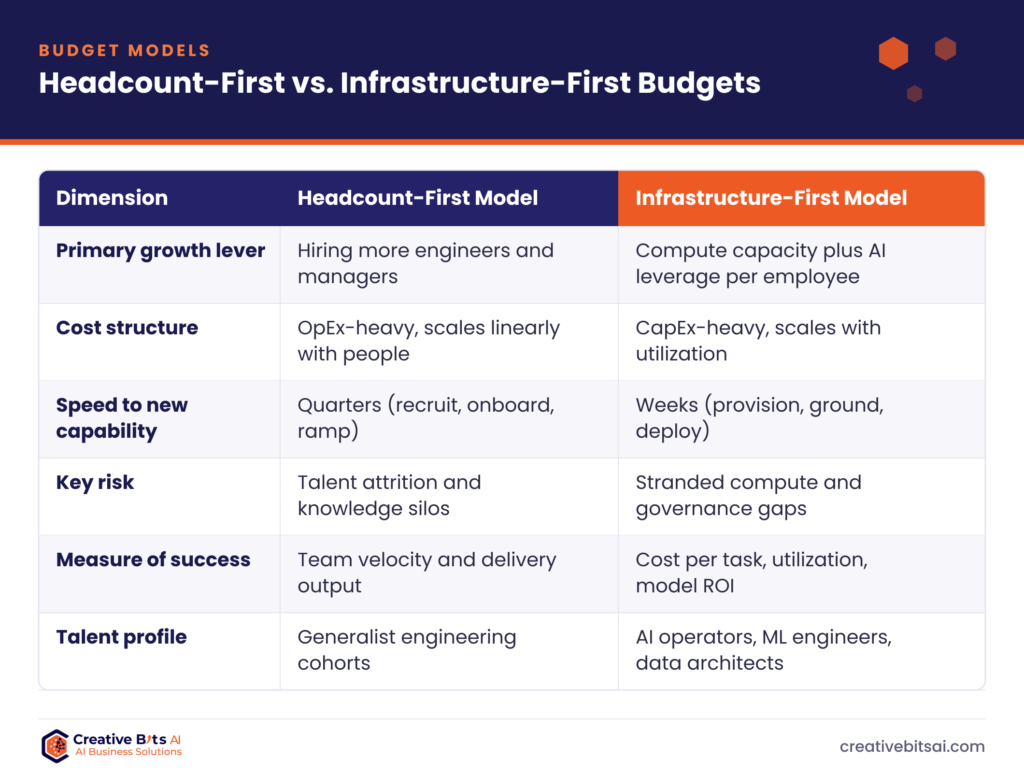
Neither model wins outright. The organizations outperforming are hybrids: a smaller, more specialized workforce supervising heavily instrumented infrastructure, with ROI measured at the workload level.
The Playbook for Enterprise Leaders: Proving ROI Before Scaling
Balancing a heavy infrastructure footprint against an optimized headcount requires a structured, empirical approach. Rather than executing sweeping restructurings that damage culture and yield unpredictable returns, technical leaders are finding success with short, highly targeted validation cycles:
- Scope one workload. Pick a single, high-volume process where AI leverage is plausible and measurable.
- Run a two-week pilot against a baseline. A tightly scoped test, like the one in our guide to planning a 14-day RAG or document impact AI pilot, proves accuracy and cost per task on your own data before capital is committed.
- Decide build vs. buy with the numbers in hand. Pilot results tell you whether the workload justifies custom infrastructure or a platform subscription; our CEO’s guide to build vs. buy for enterprise AI maps the decision.
- Scale what clears the gate, retire what does not. Compute follows proven workloads, and workforce transitions follow proven automation, not the other way around.
This granular proof-of-concept strategy lets businesses scale compute confidently without unbalancing headcount or overextending operational capital.
FAQ: AI Infrastructure Spend
What is AI infrastructure spend? It is the capital expenditure on the physical and cloud resources that run AI workloads: data centers, GPU and accelerator clusters, networking, power and cooling, plus the platform software that orchestrates them. It is measured as CapEx, distinct from the operational cost of running models (inference, API usage), which lands in OpEx.
Why are tech companies cutting headcount while increasing AI spending? Because the two draw on the same budget envelope. Compute capacity is supply-constrained and must be secured years ahead, while AI tooling raises output per employee, so boards are trading generalized headcount growth for infrastructure that compounds. Gartner’s 2026 forecast shows data center systems growing faster than any other IT spending segment.
Does the pivot mean fewer technology jobs overall? It means different jobs. Generalist roles are consolidating while demand grows for AI operators, machine learning engineers, data supply-chain architects, and the supervisory roles that audit automated workflows. Companies that reskill toward supervision retain institutional knowledge that pure replacement hiring loses.
How should a mid-size enterprise respond without hyperscaler budgets? Skip the infrastructure arms race and buy leverage instead: grounded, domain-specific AI on workloads you can measure. A scoped two-week pilot on one process, with cost per task tracked against a human baseline, tells you where spending compounds and where it stalls.
How do you measure ROI on AI infrastructure spend? At the workload level: cost per resolution or per task versus the pre-AI baseline, utilization of provisioned compute, and time to capability compared with hiring. Aggregate cloud spend hides waste; per-workload telemetry exposes it.
Conclusion: Spend Like a Builder, Govern Like a CFO
The pivot from headcount to AI infrastructure spend is a re-architecting of the modern corporate budget, not a passing cost-cutting cycle. The winners will not be the companies that spend the most; they will be the ones that pair every infrastructure dollar with engineering discipline, a governed risk framework, and workforce transitions that move people toward supervision and strategy.
Start where the evidence is cheapest: one workload, one two-week pilot, one measurable baseline. Then let the numbers decide how far the pivot goes. When you’re ready to design that first validation cycle, talk to the Creative Bits AI team. We build grounded, governed AI solutions that prove their ROI before you scale them.
Internal links used
- From Prompt Engineering to AI Engineering: Reliability Metrics, Evals and System Design
- Vertical AI: The New Playbook for Industry Workflows
- The AI Risk Register: How Enterprises Balance Innovation and Zero Trust
- Safeguarded RAG Chatbots: How Businesses Get Useful Answers Without Losing Control
- How to Plan a 14-Day RAG or Document Impact AI Pilot
- Build vs. Buy: A Guide for CEOs Navigating Custom Enterprise AI Solutions
References
- Gartner: Worldwide IT spending to grow 14.2% in 2026, totaling $6.37 trillion (press release, July 2026)
- Yahoo Finance: Hyperscalers hit $700 billion in 2026 AI spending plans
- YourStory: Tech layoffs in 2026, AI spend reshapes teams across Big Tech
- Al Jazeera: Amazon cuts thousands of jobs amid AI push