Agentic SEO workflows are quietly rewriting the rules of search optimization. Instead of a person hopping between Google Search Console, a rank tracker, a keyword tool, and a content editor, an autonomous AI agent now plans the work, executes it, checks the results, and adjusts course on its own. The human stops doing the mechanical stitching and starts directing the strategy.
This is a real shift, not a rebrand of “AI writing.” A writing tool waits for a prompt and hands you a draft. An agentic system pursues a goal: research the opportunity, build the brief, optimize the page, publish it, monitor performance, and flag decay before it costs you rankings. As Search Engine Land puts it, the difference is intelligence, not just generation. The agent thinks, plans, and executes a connected sequence rather than producing one isolated output.
For enterprise marketing teams, that distinction is the whole game. The fastest wins come from handing the repetitive, data-heavy work to agents and reserving human judgment for the decisions that actually need it.
Why Agentic SEO Workflows Matter in 2026
Search itself has changed shape. Ranking no longer means only landing in Google’s ten blue links. It now also means being cited inside Google’s AI Overviews and being referenced by ChatGPT, Perplexity, Gemini, and Copilot when someone asks the equivalent question. Generative Engine Optimization and Answer Engine Optimization have become parallel ranking surfaces, and they move too quickly for periodic, manual updates to keep pace.
Two pressures make autonomy the practical answer. First, scale: modern search engines weigh hundreds of ranking signals at once, which makes manual optimization across thousands of pages nearly impossible to sustain. Second, speed: when intent shifts or an algorithm updates, agentic systems can react in near real time instead of waiting for the next monthly audit. Industry guides like Techmagnate’s overview of agentic SEO describe this as moving SEO from a reactive maintenance task to a proactive growth engine.
There is also a measurable upside. Analysis cited by Lyzr points to AI-referred traffic converting at a meaningfully higher rate than non-AI traffic in commercial categories, which is exactly why optimizing for these new surfaces is worth the engineering effort.
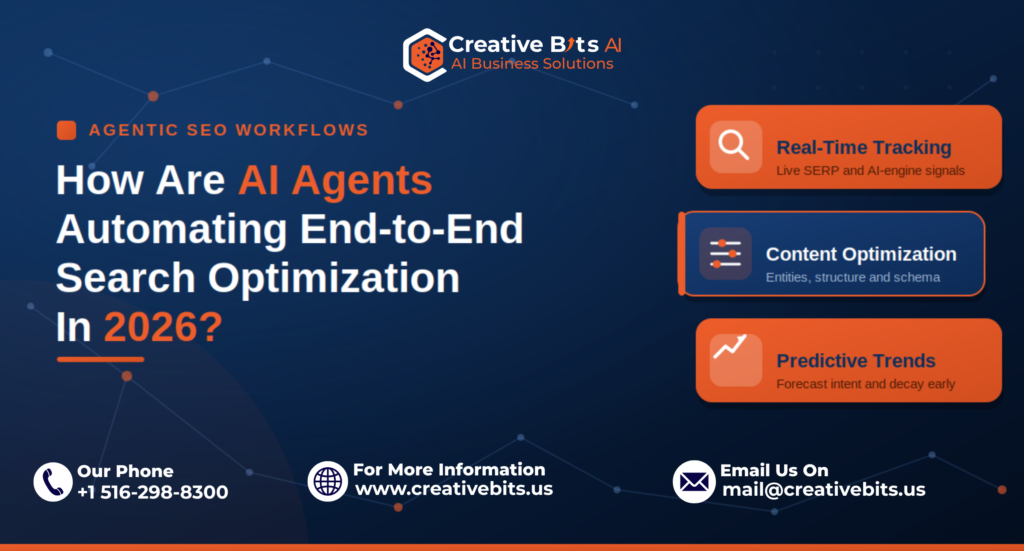
The 3 Pillars of an Agentic SEO Workflow
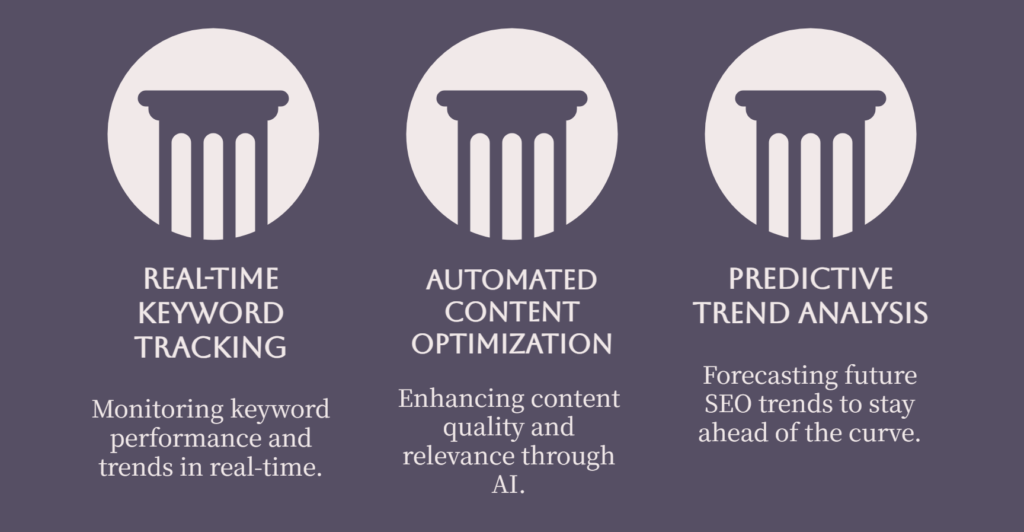
1. Real-Time Keyword Tracking
Traditional rank tracking gives you a snapshot. Agentic keyword tracking gives you a live feed. Agents continuously pull search volumes and ranking data through APIs, monitor SERP features, and watch your positions across both classic search and AI answer engines. The practical payoff is responsiveness: when a page slips from position six to eleven, or a near-ranking term sits just outside the top ten, the agent surfaces it immediately and queues the next action rather than waiting for a human to notice.
2. Automated Content Optimization
This is where agents reclaim the most hours. An optimization agent audits a page against the current top-ranking competitors, identifies missing entities and topics, recommends structural changes, and generates the schema markup that AI Overviews expect. As Frase describes it, the strongest systems connect the full content lifecycle so an agent can move from brief to optimized, published, monitored article without manual handoffs. Importantly, optimization in 2026 means tuning for three things at once: classic on-page signals, semantic depth and entity coverage, and citation-friendly formatting for answer engines.
3. Predictive Trend Analysis
The most valuable capability is the one that looks forward. Instead of reacting to ranking drops after they happen, predictive agents model where intent is heading, detect content decay early, and assess the likely impact of an algorithm change across your whole portfolio before you commit to a fix. This turns SEO from campaign-based firefighting into a continuous, always-on system that anticipates shifts rather than chasing them.
What an End-to-End Workflow Actually Looks Like
Agentic SEO rarely relies on a single super-agent. It usually orchestrates several specialized agents, each with a narrow job, connected by decision points that route information between them. A typical content workflow looks like this:
- One agent scrapes the SERP and competitor pages to identify keyword and content gaps.
- A second agent clusters related topics and maps search intent.
- A third agent builds the content brief and recommends headings and structure.
- A fourth agent reviews internal linking and generates schema markup.
- A human strategist validates the recommendations and approves publication.
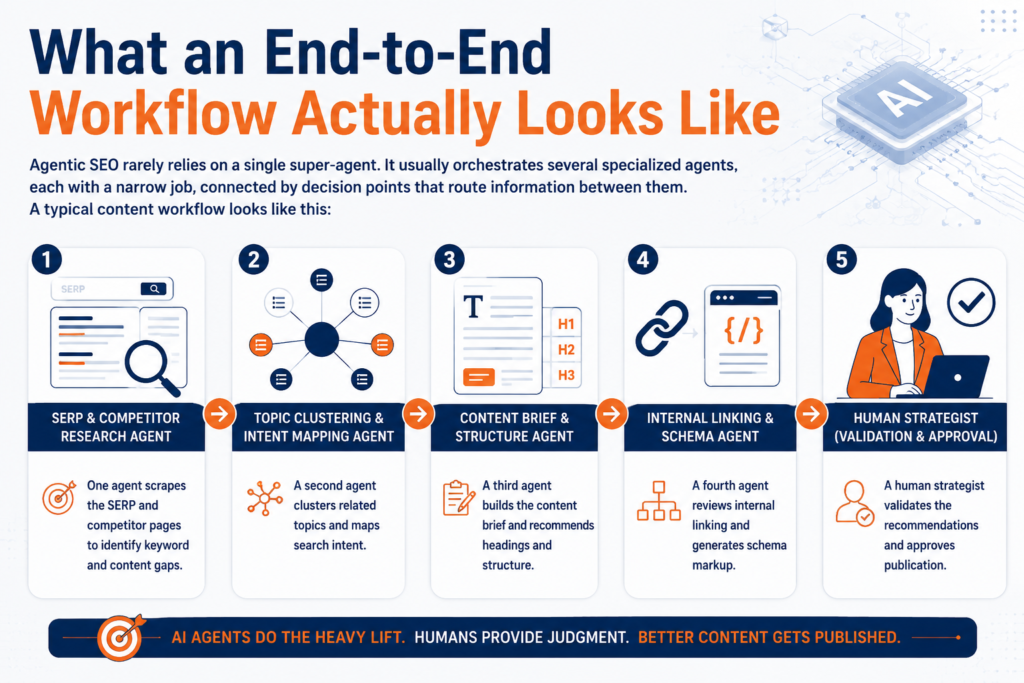
The agent handles the connective tissue. The human makes the judgment calls.
Governance: Autonomy With Guardrails
Autonomy without oversight is a liability, not an advantage. Reported success rates vary by task complexity, with straightforward edits performing far more reliably than complex content restructuring, so blind trust is a mistake. The mature pattern is human-in-the-loop: agents do the heavy lifting at scale, while humans set guardrails on brand voice, prohibited topics, and any high-stakes structural change, and retain final approval. Scheduled audits of agent outputs for accuracy, data freshness, and source reliability keep the system honest over time. The teams that win are the ones that treat agentic SEO as a governance and strategy shift, not a shortcut.
Where Creative Bits AI Comes In
Standing up an agentic SEO workflow is an applied AI engineering problem: connecting live search data to your CMS, orchestrating multiple agents, building the validation and rollback layers, and wiring in the human approval steps that protect your brand. As an applied AI consultancy and AWS partner, Creative Bits AI designs and implements these autonomous workflows end-to-end, from agent orchestration and tool integration to the governance framework that keeps everything safe and accountable. You can explore more practical AI guides on the Creative Bits AI blog.
Agentic SEO workflows lower the cost of competing in a search landscape that now spans both traditional results and AI answer engines. Real-time keyword tracking keeps you responsive, automated content optimization keeps you visible, and predictive trend analysis keeps you ahead. Start with one well-scoped workflow, put a human in the loop where judgment matters, and let the compounding time savings make the case for what comes next.
Are you ready to build an agentic SEO workflow tailored to your stack? Talk to the Creative Bits AI team about designing and deploying autonomous search optimization that fits your enterprise.