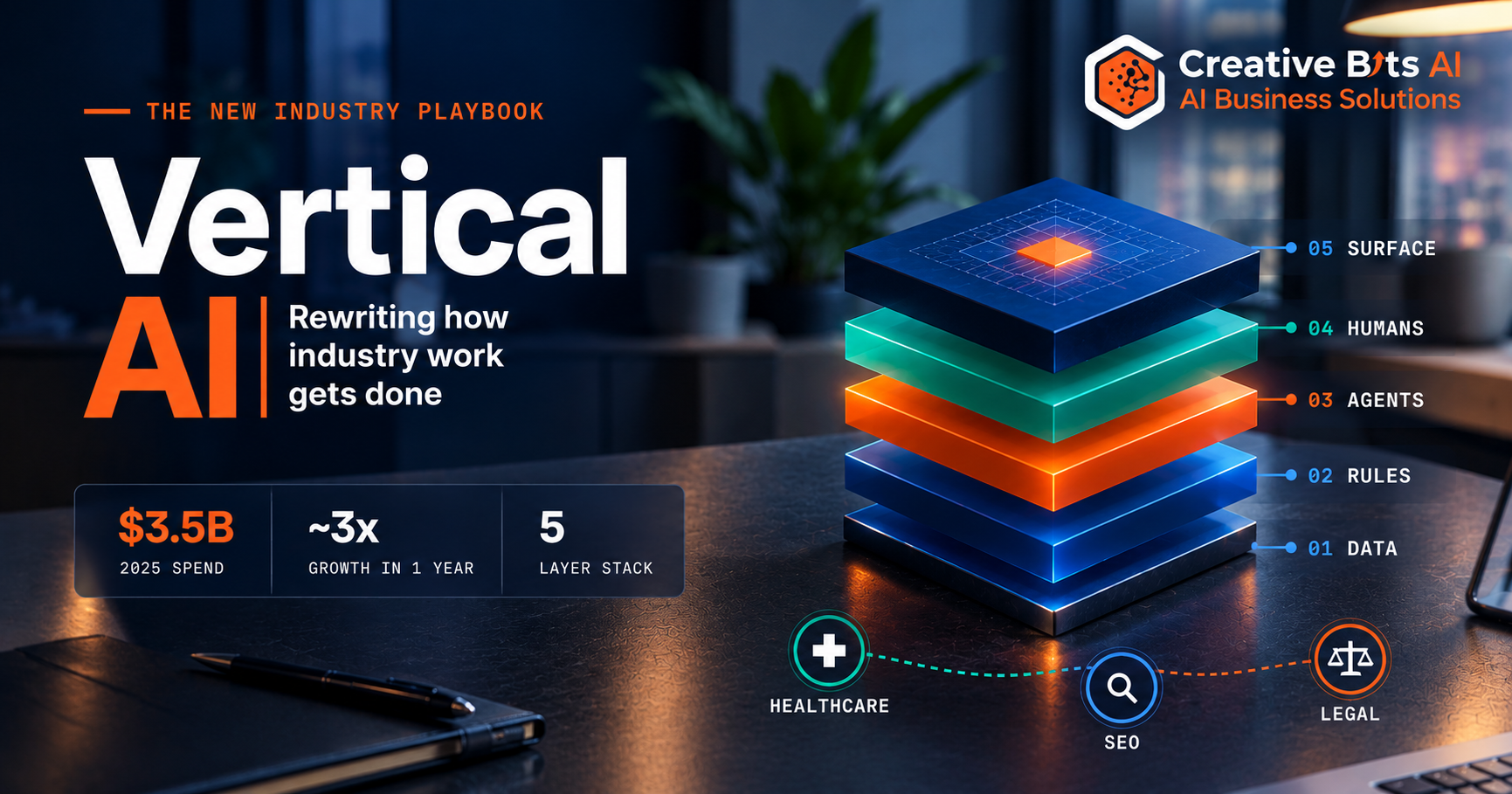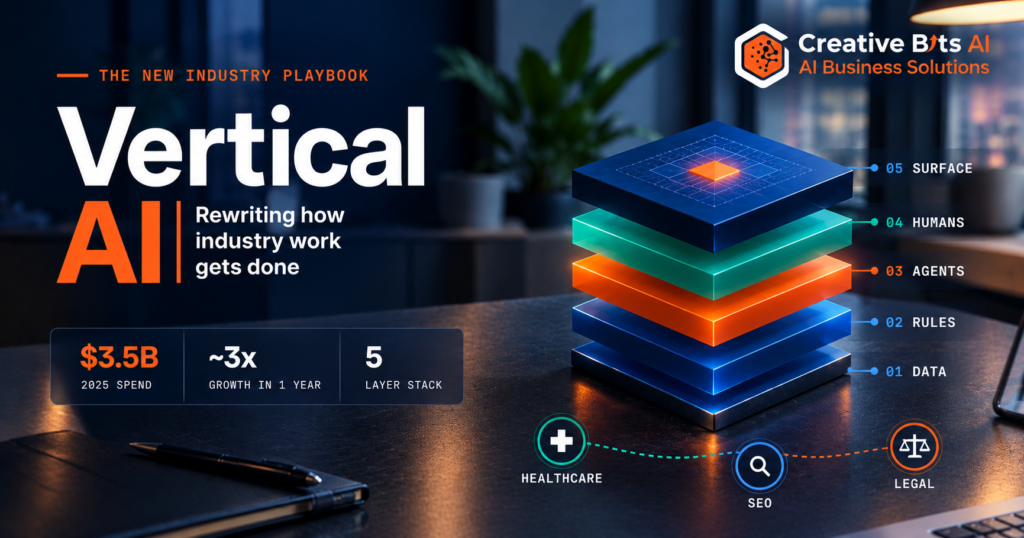
Vertical AI is artificial intelligence built for one industry rather than for everyone. It is trained on or grounded in that industry’s data, it speaks the industry’s language, it plugs into the industry’s own software, and it completes multistep work end to end instead of just answering questions. Enterprise spend on vertical AI reached $3.5 billion in 2025, almost triple the year before, according to Menlo Ventures.
Picture two assistants starting work at a hospital on the same Monday morning.
The first one is brilliant. It can write a poem, summarize a research paper, and draft a polite email in seconds. Ask it to file a patient note into the hospital’s records system using the right clinical codes, though, and it stalls. It does not know the hospital’s templates, it cannot reach the records system, and nobody is sure who checks its work.
The second assistant is far less impressive at a dinner party. It cannot write poetry. What it can do is listen to a consultation, separate the clinical details from the small talk, structure them in the format the records system expects, and hand the draft to the doctor to approve before anything is saved.
The first assistant is horizontal AI. The second is vertical AI. And over the last year, the second kind has quietly become where a growing share of serious enterprise money is going.
What is vertical AI, really?
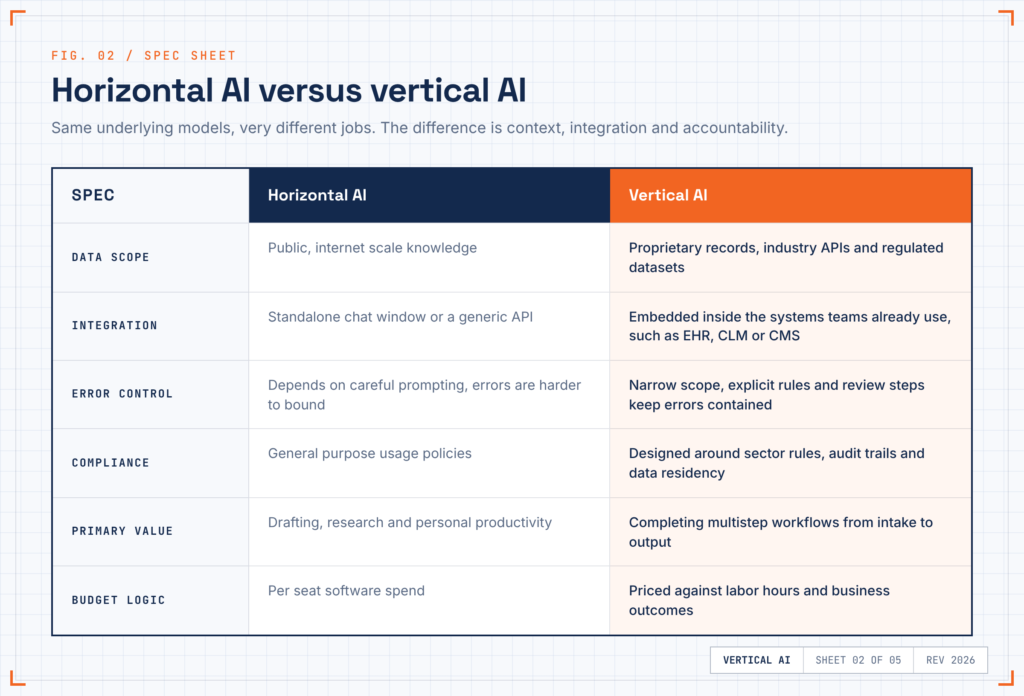
Here is the simplest way we explain it to leadership teams. Horizontal AI is a very smart generalist. Vertical AI is a specialist who already knows how your industry works.
A vertical AI system usually has four things a general chatbot does not:
- Domain data. It works from proprietary records, industry datasets, and approved sources rather than the open internet alone.
- Domain rules. It encodes the regulations, playbooks and quality standards of a specific sector.
- Native integration. It lives inside the software people already use, such as an electronic health record, a contract management system, or a content platform.
- Workflow ownership. It does not stop at an answer. It moves a piece of work from intake to finished output, with people approving the parts that carry risk.
The models underneath can be exactly the same. What changes is everything wrapped around them.
Why the money is moving to vertical AI now
The numbers tell a clear story. According to the 2025 State of Generative AI in the Enterprise report by Menlo Ventures, companies spent $37 billion on generative AI in 2025, up from $11.5 billion in 2024. Of that, $19 billion went to the application layer. Horizontal tools still take the largest share at $8.4 billion, departmental tools take $7.3 billion, and vertical AI accounts for $3.5 billion.
That vertical figure looks small until you notice its trajectory. It was $1.2 billion a year earlier, so it nearly tripled in twelve months.
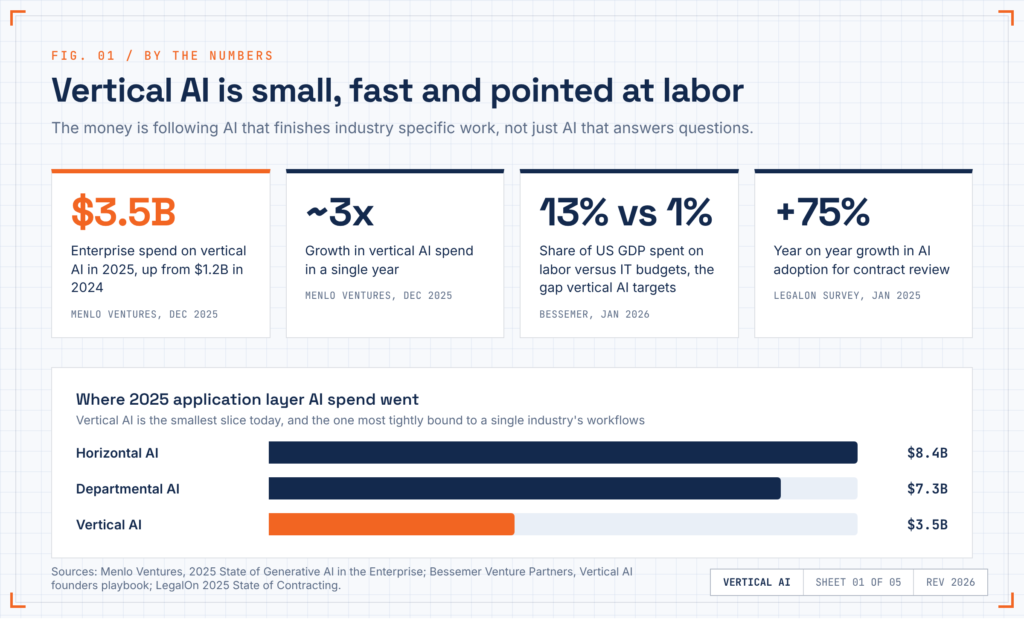
There is a deeper economic reason behind this shift too. In its founders’ playbook for building in vertical AI, Bessemer Venture Partners points out that labor budgets represent about 13% of US GDP, while IT budgets sit at around 1%. Traditional industry software competed for that 1%. Vertical AI competes for the 13%, because it does not just help someone work. It takes on part of the work.
That is the real headline for any executive reading this. Vertical AI is not a smarter chatbot purchase. It is a decision about how work itself gets done.
Three industries where vertical AI is already rewriting the workflow
(1) Healthcare: from typing notes to approving them
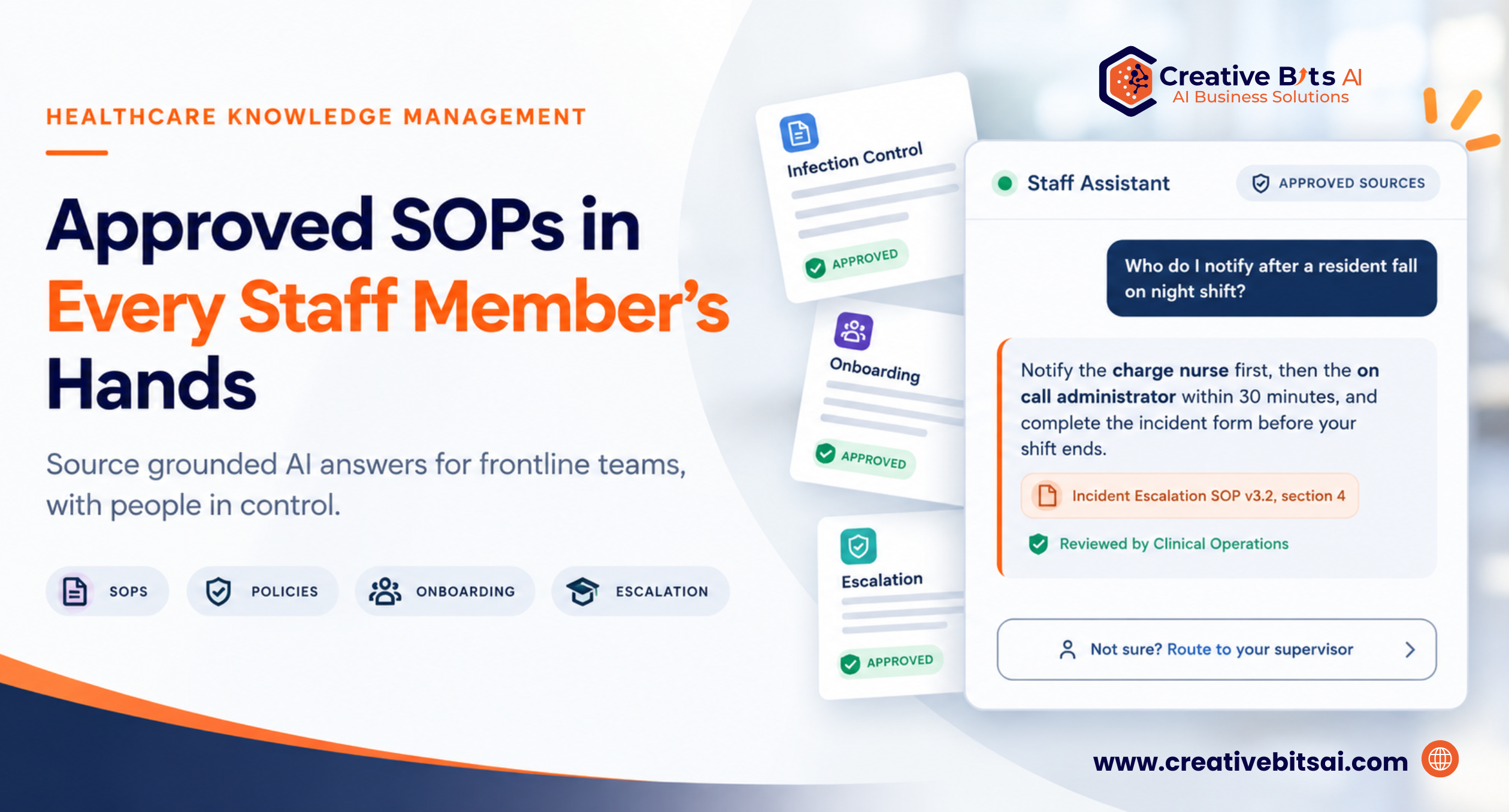
Clinical documentation is one of the clearest early wins. Ambient AI scribes listen to a consultation, filter out casual conversation, structure the clinical content and prepare a draft note for the clinician to review.
The evidence is encouraging, and it is also more measured than the marketing. A randomized trial published in NEJM AI and summarized by UCLA Health followed 238 physicians across 14 specialties and about 72,000 patient encounters. One tool reduced note writing time by 9.5% more than the note-writing group, and both tools tested showed modest improvements in burnout measures. The same study also reported that AI generated notes occasionally contained significant inaccuracies.
That last point is the whole lesson in one sentence. Vertical AI in healthcare works best when a clinician remains the final approver. We explored this pattern in more depth in our guide to healthcare knowledge management with AI.
The market is responding. Menlo Ventures estimates healthcare AI spend at about $1.5 billion in 2025, with ambient scribes alone reaching $600 million.
(2) Legal: from reading every clause to reviewing the exceptions
Legal teams live in documents, and generic models struggle with the precise language, jurisdictional nuance, and liability detail of real contracts. Legal-specific vertical AI parses contracts against a company’s own playbook, flags non-standard clauses, checks them against the rules for a given jurisdiction, and drafts suggested redlines.
Adoption is climbing fast from a small base. The LegalOn 2025 State of Contracting survey found AI adoption for contract review grew 75% year on year, with 14% of legal teams using it, up from 8% in early 2024. Time savings were the most cited benefit, mentioned by 79% of respondents. Menlo Ventures puts the legal AI market at around $650 million.
Notice how the human role shifts. Lawyers stop reading every clause from scratch and start reviewing the exceptions the system surfaces. That is a very different, and far more valuable, use of an expert’s time.
(3) Marketing and SEO: from writing prompts to running pipelines
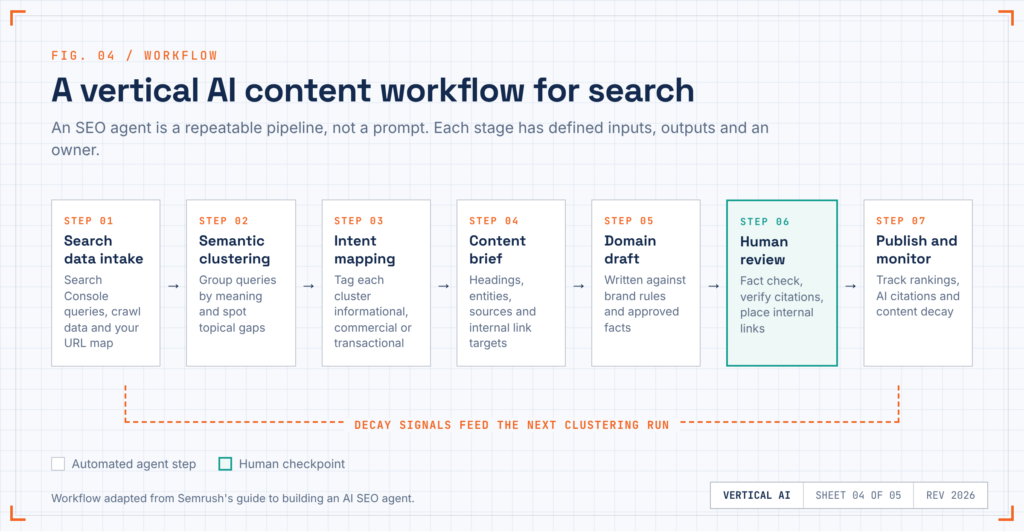
This one is close to home for us. Many teams still use AI for content by typing something like “write an SEO article about X” into a chat window. The output tends to be generic, because the model has no idea what your audience searches for, what you have already published or what your brand stands for.
A vertical approach treats content as a pipeline. Semrush’s guide to building an AI SEO agent describes exactly this: start with one clearly defined, repeatable task, document the human process, connect verified data such as Google Search Console exports, and have the agent cluster queries and generate briefs with internal linking suggestions. Importantly, the guide recommends that a human still implements the internal links.
If you want the wider context on how agents slot into business processes, our piece on intelligent workflow design with AI agents walks through the design principles step by step.
The technical bit: what a vertical AI stack looks like
Let us get under the hood for a moment, because this is where most projects either succeed or quietly fail.
A production vertical AI system is not one model. It is a stack of five layers, and the model is only one ingredient inside them.
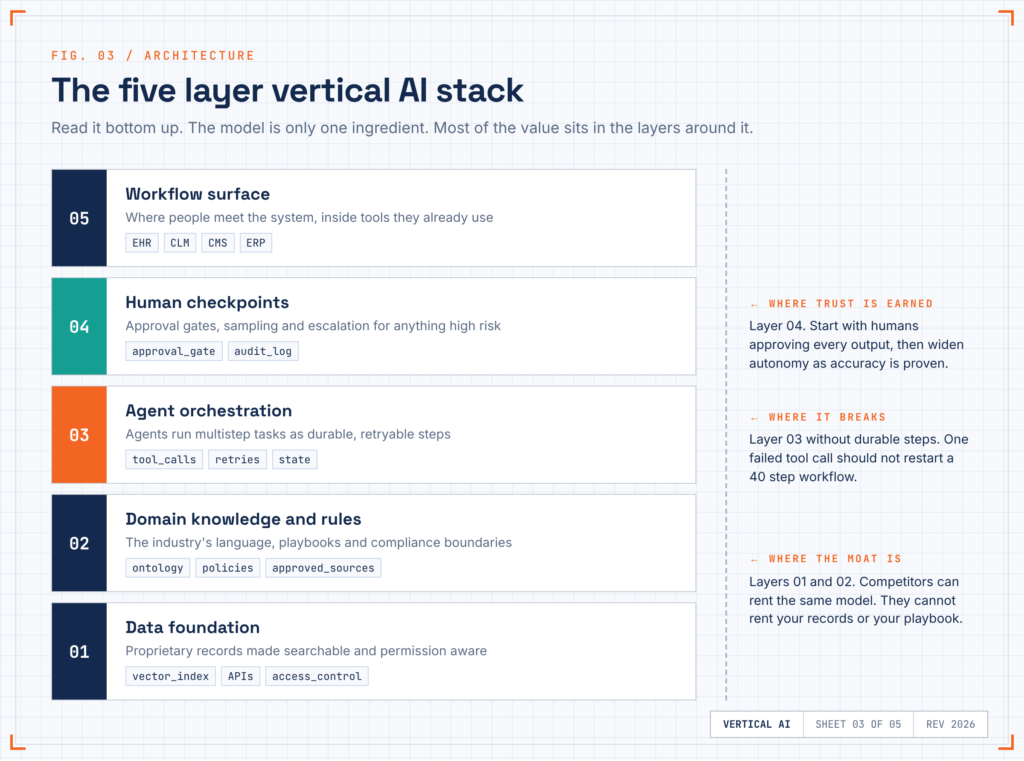
Layer 01: the data foundation. Proprietary records are made searchable, usually through a vector index for semantic retrieval combined with APIs into live systems. Access control matters here as much as search quality, because the system must only see what the requesting user is allowed to see.
Layer 02: domain knowledge and rules. This is where the industry lives: terminology, playbooks, compliance boundaries, and the list of approved sources the system is allowed to answer from. It is also where most of the defensibility sits. A competitor can rent the same model you use. They cannot rent your records or your playbook.
Layer 03: agent orchestration. Agents carry out multistep tasks by calling tools, reading results, and deciding the next action. The hard engineering problem here is reliability. As the team at Inngest put it in their guide to building durable AI agents, most AI agents do not crash spectacularly; they fail silently. Their answer is durable steps, where each LLM call or tool call is tracked, retried on its own and saved, so a crashed workflow resumes from the last completed step rather than starting over.
Layer 04: human checkpoints. Approval gates, sampling and escalation for anything carrying clinical, legal, financial or reputational risk. Bessemer’s playbook makes the same recommendation: start by automating manageable steps with humans in the loop, then expand autonomy as reliability is proven.
Layer 05: the workflow surface. The place where people actually meet the system, ideally inside the tools they already use rather than in yet another window.
What this looks like in code
Here is a simplified, illustrative example of a contract review workflow built on those principles. It is pseudo code rather than a specific library, but it shows the three ideas that matter most.
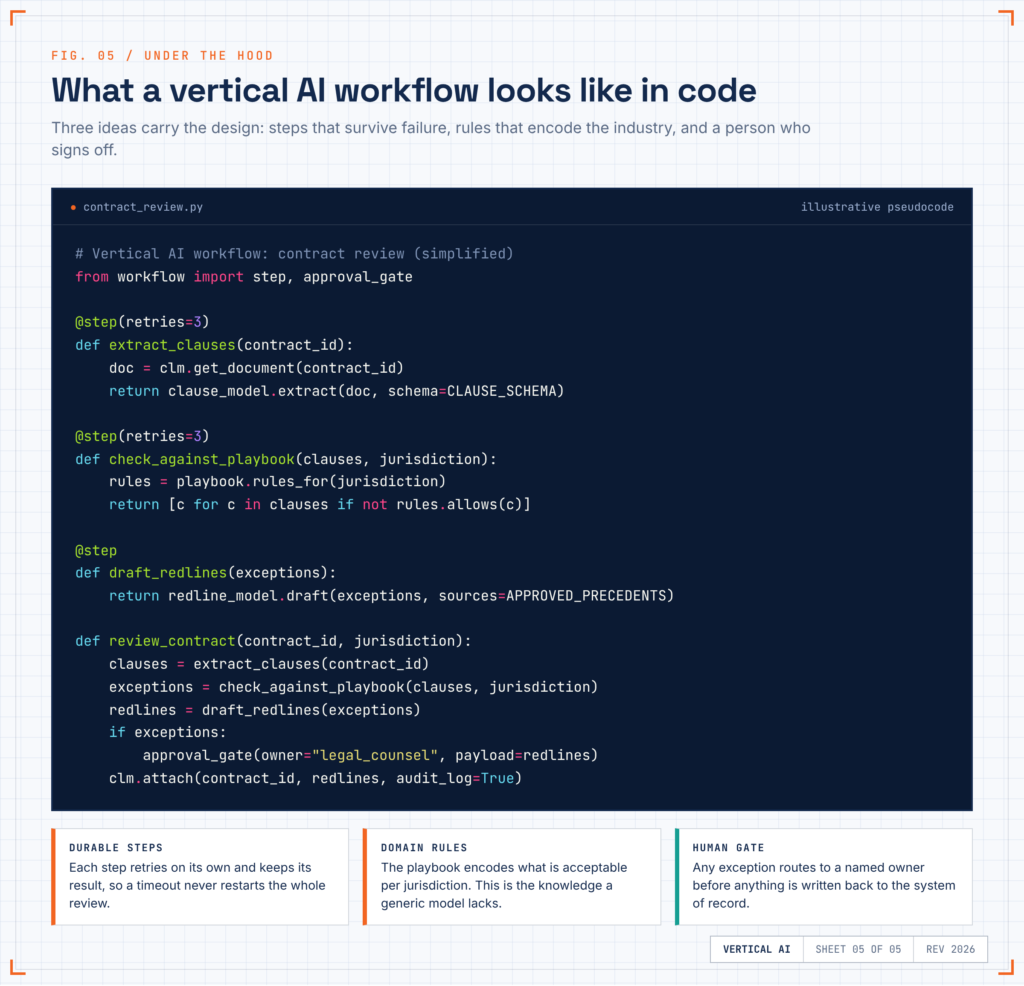
Each function is a durable step that retries independently, so one timeout never restarts the whole review. The playbook check encodes what is acceptable in each jurisdiction, which is precisely the knowledge a generic model lacks. And any exception routes to a named legal owner before anything is written back to the contract system, with an audit log of every action.
If security and governance are your first concern, our comparison of AI security frameworks and our guide to the AI risk register and zero trust cover how to design these controls properly.
Five rules for building vertical AI workflows that actually ship
Across the projects we have handled, the same five principles separate pilots that stall from systems that reach production.
1. Map intent before you automate. In search, that means separating informational, commercial, and transactional intent. In operations, it means separating rule-based work from judgment calls. Only the rule-based work should be automated first.
2. Ground everything in approved sources. Models read as generic until you feed them explicit context: your internal URL map, brand rules, policies, and proprietary insight. The system should answer from approved sources and cite them.
3. Build guardrails into the workflow, not the prompt. Validation rules, permission checks and scope limits belong in the code and the data layer, where they are enforceable, rather than as polite requests inside a prompt.
4. Keep people at the right checkpoints. Human review is not a sign the AI failed. It is how trust is earned. Fact-checking statistics, verifying citations, and approving high-risk outputs should be designed in from day one.
5. Structure output for answer engines. Google’s own guidance on AI features and your website is refreshingly direct. There is no special schema or secret optimization needed to appear in AI Overviews or AI Mode. The fundamentals still win: crawlable pages, clear internal links, important content in text form, and structured data that matches what is visible on the page. Google also notes that AI features use query fan-out, issuing related searches across subtopics, which rewards content that genuinely covers a topic in depth. Clear headings, direct answer openings, and FAQ blocks help both humans and machines find the answer.
For a deeper look at how AI engines decide which sources to cite, read our guide on earning AI citations through E E A T.
Should you build or buy vertical AI?
This is usually the next question, and the honest answer is that it depends on where your advantage lives.
If the workflow is common across your industry, such as standard clinical documentation, a proven vertical product will often get you there faster. If the workflow depends on your proprietary data, your specific playbook, or the way your organization uniquely operates, that is exactly the knowledge you should not hand to a generic product. In those cases, a custom vertical layer built on top of existing models tends to create the most lasting value.
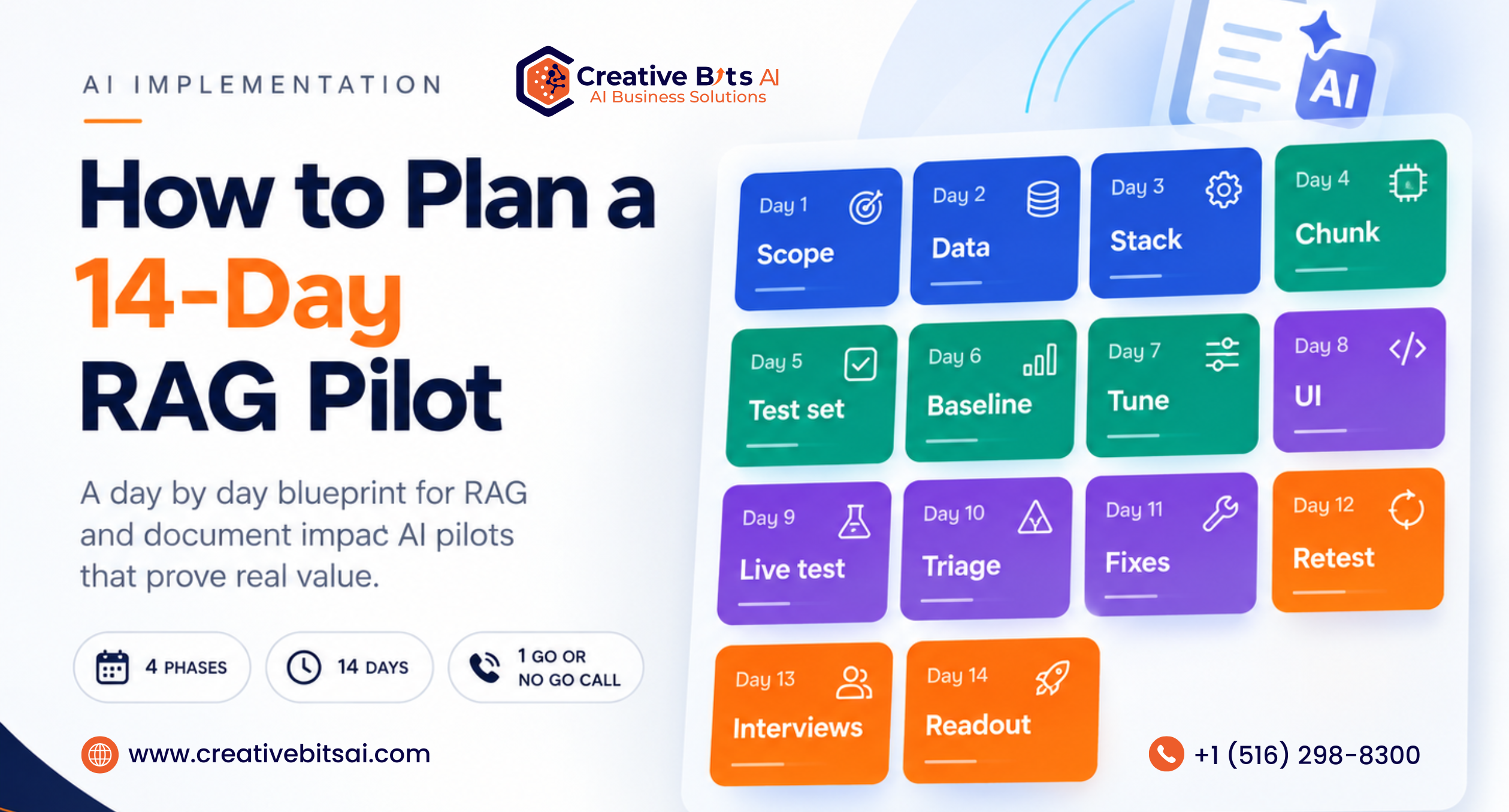
We break this decision down in detail in our build versus buy guide for enterprise AI, and if you want to prove value quickly before committing, our 14-day RAG pilot plan is a practical place to start.
The strategic takeaway
The competitive edge in AI is shifting. It is no longer about who can prompt a general model the fastest, because everyone has access to the same models. The lasting advantage belongs to organizations that encode their own expertise, their data, their rules, and their judgment into workflows that run reliably every day.
That is what vertical AI really is. Not a different kind of model, but a different kind of commitment to how work gets done.
At Creative Bits AI, we help organizations design and build these industry-specific workflows, from the data foundation through to the human checkpoints, subject to a short technical discovery. If you are weighing up where vertical AI could take pressure off your operations, request a demo or learn more about our team.
Frequently asked questions (FAQs)
What is the difference between vertical AI and horizontal AI?
Horizontal AI is general purpose and works across many industries, like a general chatbot. Vertical AI is built for one industry, grounded in that industry’s data and rules, integrated into its software, and designed to complete specific workflows end to end.
Is vertical AI more accurate than general AI?
It can be, within its domain, because its scope is narrower and it works from approved sources with explicit rules and review steps. It is not error-free, which is why well-designed systems keep humans approving high-risk outputs.
Which industries benefit most from vertical AI?
Industries with heavy documentation, strict regulation, and repeatable workflows tend to benefit first. Healthcare, legal, financial services, insurance, and manufacturing are leading examples, alongside specialized marketing functions such as SEO.
How much is being spent on vertical AI?
Menlo Ventures estimates enterprise spend on vertical AI reached $3.5 billion in 2025, up from $1.2 billion in 2024.
Do I need special markup to appear in Google AI Overviews?
No. Google states that no special schema or optimization is required. Strong SEO fundamentals, crawlable content, clear internal linking, and structured data that matches visible content remain the best foundation.
How do I get started with vertical AI?
Pick one well-defined, repeatable workflow, document how people do it today, connect verified data, and automate the rule-based steps first with a human approving the output. Expand autonomy only as accuracy is proven.