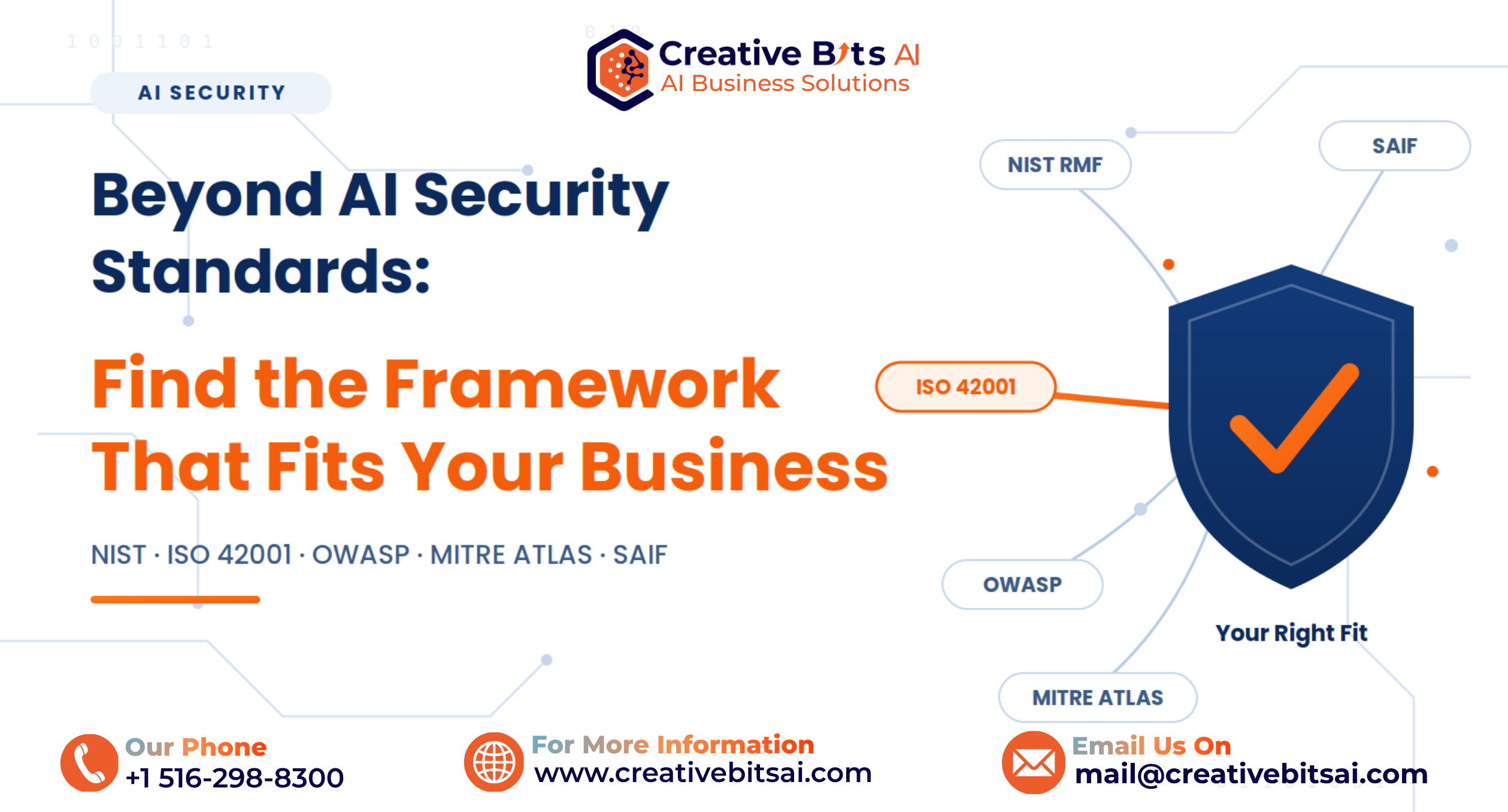
Artificial intelligence is shifting out of experimentation into the inner workings of organizations. Firms are implementing AI in the areas of recruiting, financial services, customer service, surveillance, and decision-making processes. With this growing rate of adoption, a new challenge emerges: … Read More
ai compliance
AI Governance Frameworks: Building Internal Review Boards for Responsible AI Deployment
From Prompt to Pipeline: Engineering Deterministic Outputs from Non-Deterministic AI Models
Generative AI and large language models (LLMs) have transformed the capabilities of various industries, from contract summaries to AI assistant prompting. These models, however, are non-deterministic in nature, even with their power, i.e., identical prompts will yield varying outputs when … Read More
AI Observability: The Missing Link Between AI Pilots and Production Deployments
The uptake of artificial intelligence has been fast, yet the success of AI projects is disproportional. Most organisations invest a lot in pilots, chatbots, and recommendation engines, but many of them are unable to stabilise these systems in a scalable … Read More
The Compound AI Systems Revolution: Why Single-Model Solutions Are Already Obsolete
During most of the previous ten years, the development of artificial intelligence was determined by the volume and capacity of specific models. Big data, greater model dimensions, and more exact benchmarks became colloquially referred to as innovation. Since the first … Read More
Understanding the Difference Between Generative AI and Traditional AI
The artificial intelligence landscape is evolving rapidly, with generative AI vs traditional AI becoming a critical decision point for businesses. According to a McKinsey report, nearly 40% of new AI investments target generative AI, yet traditional AI still powers over … Read More
Building 17 Agentic AI Patterns and Their Role in Large-Scale AI Systems
The new phase of artificial intelligence is engineering-focused. In this phase, engineers will concentrate on designing systems that operate as independent agents. These systems will require the ability to reason and take various types of actions in highly complex, dynamic, … Read More
Agentic AI Engineering – The Blueprint for Production-Grade AI Agents
The age of large language models (LLMs) has given businesses a glimpse of the future: intelligent systems that can think, act, and collaborate autonomously. However, transforming this vision into reality requires mastering Agentic AI Engineering — the disciplined practice of … Read More