AI is more than hype these days. It’s vital to running a successful business. AI helps in many ways, from knowing what customers want to foreseeing when machines might break down. But there’s a problem: getting the data to get these AI systems running.
It’s not easy to get the information needed. Privacy rules, like General Data Protection Regulation (GDPR) and Health Insurance Portability and Accountability Act (HIPAA), limit the use of customer info. Rules also limit sharing data between departments or vendors. Even when data is available, it can be lacking, old, or not complete enough for business planning.
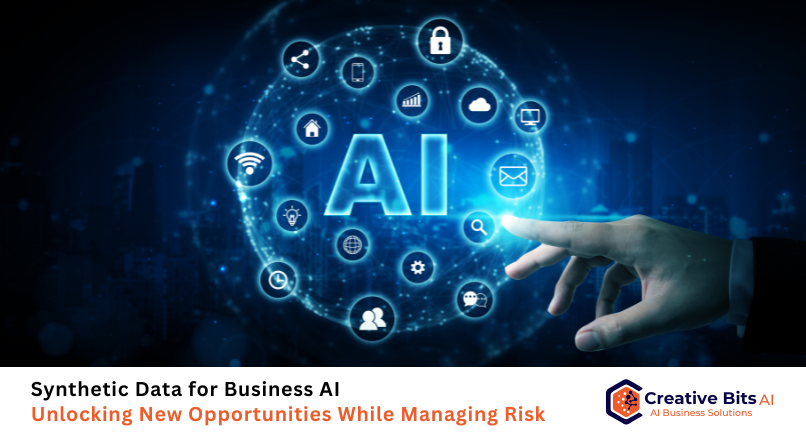
That’s where synthetic data comes in. It’s changing how businesses create and the way they use AI. Synthetic data is fake information that looks real but doesn’t have customer info or business secrets. Computer programs create it by learning how real data works and then make new datasets that follow those patterns using existing data.
Synthetic data changes AI development for the better, making it faster, safer, and cheaper. With it, companies train AI models in weeks instead of months. They test systems for all possible situations while following the rules.
Like any business skill, synthetic data needs care. If used right, it can speed up AI work and make the impossible possible. If used carelessly, AI systems might seem good but fail when put to the test. Knowing when and how to use synthetic data is important for business leaders who seek to stay ahead with AI.
Understanding Synthetic Data: What Business Leaders Need to Know
Let’s set aside the tech speak and talk about what synthetic data can do for your business.
Say you own a store and want to teach an AI to guess which shoppers might bring items back. Usually, you would need tons of customer info, like past buys, return history, and who they are. That’s where it gets hard. Privacy rules kick in, people must say it’s OK to use their information, data must be made anonymous, and following the rules becomes a headache.
Synthetic data gives you another way. Instead of using real customer data, special computer programs check your data for patterns. They look at things like how much people spend versus how often they return things, how shopping changes with the seasons, and how different groups of people shop. Then, these programs make up fake customers with shopping habits that look real but don’t belong to anyone.
Here’s what’s important: Anonymized data starts with real people and tries to hide who they are. Synthetic data doesn’t use real people at all. It makes up fake people who act like real ones. It’s a small difference that matters a lot because it can prevent privacy problems.
There are several ways to do this, but you don’t need to know how they work to use them. The important thing is that modern AI can learn from your data and copy it to make new datasets. Some ways involve AI systems that compete to make the data look real. Other ways use math or simulations that have been tested for years in fields like space and medicine.
The main thing to know is that synthetic data lets you make as much practice data as you want, made for your business, without the legal, moral, or practical problems of getting and handling real customer information.
The Business Case: When Does Synthetic Data Make Sense?
Not every business situation needs synthetic data. Making good choices means knowing when it’s truly helpful and when it’s just an extra step. Let’s look at when using synthetic data can make a real difference for your business.
When Finding Real Data Is Tough or Costly
Imagine a factory using to predict when equipment might fail. If a certain failure only happens every few years on each machine, waiting for real data could take ages. Synthetic data lets you mimic thousands of failure situations based on what you know about the machines, speeding up your project from years to months.
Or, say you’re launching a product or moving into a new area. You won’t have any past numbers to look at. Synthetic data based on similar products or areas can give you a base to start building your AI, even before you get real customer data.
When Privacy Laws Get in the Way
Hospitals have very strict rules about patient data. If a hospital wants to create AI to spot diseases early, it can’t just share patient info with other hospitals or AI developers. Synthetic patient data can keep the link between symptoms, tests, and sicknesses, letting AI be created without breaking privacy rules or risking patient information.
Finance companies have similar problems. Testing a new system to catch fraud using real transaction data can cause legal and compliance issues. Synthetic transaction data lets you test your system against many fake fraud situations without using real customer info.
When You Need to Check Unusual and Rare Cases
Most business data is predictable, which is why AI is useful. But AI also needs to handle odd situations well. A self-driving vehicle might only see fog, rain, or ice sometimes, but it needs to be safe every time.
Synthetic data lets you make lots of these rare but vital situations. You can create many unusual cases, test your AI system, and keep improving it until it’s solid, all before using it in the real world. This is very useful in businesses where failures are costly, whether it’s money, reputation, or safety.
When Poor Data Quality Limits Real Datasets
Real data is often messy, with missing parts, mistakes, and uneven numbers. If 95% of your customers act one way and 5% act differently, your AI will naturally get better at predicting what the majority does. But this can cause problems if that 5% is more valuable or represents risky situations.
Synthetic data lets you control these imbalances. You can create even datasets where the smaller groups are well-represented, making sure your AI works well for all customers, not just the most common ones. At Creative Bits AI, we help businesses find where these imbalances are hurting their AI and create synthetic data plans to fix these problems.
The Strategic Advantages: Why Leading Companies Are Adopting Synthetic Data
Beyond just fixing data problems, synthetic data gives businesses a leg up in how they build AI to compete.
Quicker Development
Getting to market fast is key. If your rivals are also trying to roll out AI, being able to move fast could make you a leader instead of a follower. Getting real data takes time with approvals, cleaning, and a lot of back and forth.
But once you have a synthetic dataset set up, you can make training data in hours or days instead of months. This speed adds up, cutting months off your schedule. If AI gives your company an edge, this speed could be worth a lot of money.
Cheaper and Easier on Resources
Getting real-world data is pricey. It needs equipment, people, time, and often outside help. You must deal with each data source, which means talking to people, contracts, setting things up, and keeping it all running. For new and mid-sized companies, these costs can make big AI plans too expensive.
Synthetic data changes the game. Putting together a way to make good synthetic data costs money at first, but making more data is cheap. Need to increase your training data by ten times? With real data, that could mean ten times the cost. With synthetic data, you just let the process run longer.
The savings go beyond the surface. Legal checks, following the rules, data safety, and handling risk all take less work with synthetic data. These hidden savings can be bigger than the direct cost cuts.
Better Innovation
When data is hard to get or use, companies play it safe. Teams don’t try new things to avoid using up the data they have. This holds back new ideas.
Synthetic data changes that. Development teams can try out different AI methods, test crazy ideas, and try new solutions without worrying about using up their data. This freedom can lead to big discoveries that wouldn’t happen if resources were tight.
Built-In Compliance
Data breaches are always in the news, and data privacy rules keep getting stricter. Using synthetic data lowers your company’s risk. You don’t keep huge databases of customer info that could be hacked. You don’t send sensitive data between partners. Following the rules becomes much easier.
This lower risk is good for business. Cheaper insurance, simpler security, faster legal approvals, and a better brand all help your profits. In industries where trust is vital—like hospitals, banks, and schools—being able to use AI while showing strong privacy can set you apart.
Understanding the Risks: What Can Go Wrong and How to Avoid It
Synthetic data isn’t a perfect fix, so leaders should know what it can’t do if they want to use it right. Let’s check out the main problems and how to handle them.
### The Overfitting Trap
Here’s what often goes wrong: A team builds an AI system mostly using fake data. When they test it, it looks great—high accuracy and good numbers all around. But when they put it to use, things fall apart. What happened?
Fake data, especially if it’s made badly or used alone, can be too clean. It doesn’t have the random stuff, mistakes, and weird things that happen in the real world. AI systems trained only on this perfect data get too good at handling fake situations and fail when they meet the messiness of reality.
The answer is not to skip fake data, but to use it smartly. Think of it as helping real data, not replacing it. Use it to fill in holes, balance things out, and make test situations, but always double-check how your AI system does with real data before using it. This mix lets you use the good sides of fake data while keeping things real.
### Bias Boost
Fake data makers learn from the data they have. If your data has biases—and most business data does—those biases can get stronger when making fake data. If your past hiring data shows unfair patterns (even without meaning to), fake data made from it could keep those patterns going or make them worse.
This means you need to pay close attention. Before making fake data, check your starting data for biases. Watch your fake data making to see if anything weird pops up. Test your AI systems to see if they work fair for different groups of people, markets, or other important groups. Keeping track of bias isn’t a one-time thing; it’s something you always need to do when working on AI.
### The Realism Gap
It’s hard to make fake data that really gets how complex the real business world is. People, markets, and how things work have small patterns and details that are hard to copy perfectly.
A fake dataset might get the obvious things right—customers who buy product A often buy product B—but miss small details that matter in real situations. Maybe the A-to-B thing only happens during certain times, or for certain customers, or when the market is a certain way.
Because of these holes, I don’t think fake data is ready to go just because it looks a lot like real data. You still need to test it hard with real situations. Think of fake data as a great way to get you most of the way there faster and cheaper—but you still need to check things in the real world to finish the job.
### Computer Costs and Tech Trouble
Fake data saves some money, but it costs in other ways. Making good fake data takes computer power and tech skills. For big datasets—like real-looking pictures, natural language, or complex business steps—making the data can take a lot of computer time and power.
Businesses need to think about these things when they decide. Sometimes, the cost of making fake data is more than just getting real data. The trick is to pick the spots where fake data gives you the most benefit.
Best Practices – How to Implement Synthetic Data Successfully
For business leaders planning to add synthetic data to their AI, here’s how to do it right.
1) Start with a Hybrid Approach: The best way to use synthetic data is not to replace real data right away. Instead, find the areas where you have problems—not enough data for a certain situation, privacy issues with a dataset, or an imbalance in a key customer group—and use synthetic data to fix those specific issues. Start with a small project where synthetic data improves your current data. Measure how it affects model performance, speed, and cost. Gain confidence and skills before using synthetic data on a larger scale.
2) Invest in Validation Infrastructure: You must measure to improve. To use synthetic data well, you need good ways to check that it keeps the same statistical qualities as real data and that AI systems trained with it perform well. Set clear goals, create test sets with real data, and watch performance over time. If performance drops, you need the data and ways to figure out if the synthetic data is the problem.
3) Document Everything: Be open about what you do, both inside and outside the company. Keep clear records of how synthetic data is made, what real data it comes from, what assumptions were made, and how synthetic and real data are used in model training. This helps new team members understand your data plan. It helps with rules and audits. It helps fix problems when they happen. And it shows customers and partners that you’re using synthetic data responsibly.
4) Leverage Domain Expertise: The best synthetic data isn’t made by data scientists alone. It needs knowledge about your business, industry, and customers. Work with experts—like sales leaders, operations managers, or customer service staff—to make sure the synthetic data captures the details that matter in the real world. For example, making synthetic customer service data is better with input from experienced service workers who know how different customer issues usually play out. Their knowledge helps make realistic scenarios, not just statistically possible ones.
5) Monitor for Drift and Degradation: Business changes. Customer tastes change, markets change, and competition changes. Synthetic data made today might not be right tomorrow. Watch for when AI model performance starts to drop and have plans to update both your real data collection and synthetic data creation to stay current. This ongoing work isn’t just for synthetic data—all AI systems need it—but it’s important when synthetic data is a big part of your training.
Real-World Applications: How Businesses Are Using Synthetic Data Today
Seeing how synthetic data works in real situations makes it easier to see its value for businesses. Here are some examples from different industries.
Retail and E-Commerce
A major e-commerce store wanted to make its product suggestions better. The problem was that new products didn’t have any sales history. Also, because of the seasons, some products didn’t have enough data during certain times of the year.
They made fake customer data that looked like different shopping habits and trends. This lets them train their suggestion system with much better data. Because of this, people clicked on the suggestions 23% more often. The store also sold more related items, even for new products.
Financial Services
A local bank wanted to update its fraud detection, but couldn’t share customer information due to legal reasons. Plus, real fraud cases were rare, happening in less than 0.1% of all transactions.
The bank used fake transaction data that acted like real transactions. However, it also added different kinds of fake fraud cases. This lets them create and test AI models without worrying about privacy. As a result, their systems got better at spotting both regular and fraudulent transactions. They found 34% more fraud while also reducing the number of false alarms by 18%.
Manufacturing and Industrial Operations
An auto parts company wanted to use AI to predict when machines might fail. Since equipment failures didn’t happen often, gathering real data would take years. However, each failure costs a lot of money in downtime and repairs.
They used fake data based on sensor readings, maintenance records, and machine designs to create thousands of fake failure situations. Their AI, which was trained on this fake data and tested with real failures, could predict failures with 89% accuracy about two days in advance. This gave them enough time to schedule maintenance without stopping production. We at Creative Bits AI help manufacturing clients build these systems by combining our AI skills with their industry knowledge.
Healthcare and Life Sciences
A hospital group wanted to build AI to detect sepsis early. However, they couldn’t share patient info between hospitals or with other companies. They made fake patient data that kept the connection between things like vital signs, lab results, and sepsis outcomes. This allowed different hospitals to work together on the AI.
The final system, trained on fake data and tested on real patients, gave warnings about six hours earlier than normal. This saved lives and lowered healthcare costs.
Human Resources and Talent Management
A large company wanted to be fairer in its hiring process. But they didn’t have enough diverse data to train their AI screening systems. They created fake candidate profiles that made sure different groups were equally represented. This allowed them to train AI systems that judged skills without being unfair.
The company’s AI-assisted screening, carefully checked for fairness, reduced the time it took to hire by 40%. It also increased the variety of candidates who made it to the interview stage.
Learn More About Our AI Solutions Here at Creative Bits AI
Conclusion – Acting on Synthetic Data
Synthetic data is changing how companies work with AI. It offers ways to deal with common AI problems like not enough data, privacy issues, high costs, and slow progress. But remember, it’s not a perfect fix and doesn’t mean you can skip using real-world data or proper AI methods.
Companies that do well with synthetic data will use it wisely. They’ll know when it’s helpful, use it together with real data, check it carefully against real-world results, and keep making their synthetic data better based on what they learn.
If you’re a business leader wondering if synthetic data fits into your AI plans, the answer is likely yes. But the key is figuring out the best ways to use it for the biggest benefit. Start with a small test project in a clear problem area, track the results closely, and expand as you see it working.
AI competition is getting tougher in all industries. The companies that build better AI faster and cheaper will gain a lasting edge. Synthetic data is becoming a key tool for speeding up and improving AI development.
Want to see how synthetic data can speed up your AI projects while keeping privacy, rules, and performance top-notch? At Creative Bits AI, we’re experts in both AI development and making business processes better. We can help you find where synthetic data can give you a strategic advantage and create solutions that get real results. Get in touch to talk about your specific challenges and see how we can help you create smarter, safer, and more scalable AI solutions that change how your business works.
The real question isn’t if synthetic data will be part of enterprise AI, but whether your company will start using it now to get ahead or wait until your competitors have already taken the lead. Now is the time to see what synthetic data can do for your business.